
Chicken care and health
Beginner friendly

GR Animals
/
Loved and growing

Course outline
In this short course there are 4 modules with resource pdfs, homework and quizzes
- Introduction
- Mission / Vision
- Topic 1
- Deciding on your method of raising chickens
- Topic 2
- Health of chickens
- Topic 3
- Cost!
- Topic 4
- Predators, protection
- Conclusion


Who am I?
My name is Grae, I own GR Animals which is my Animal Consulting business.
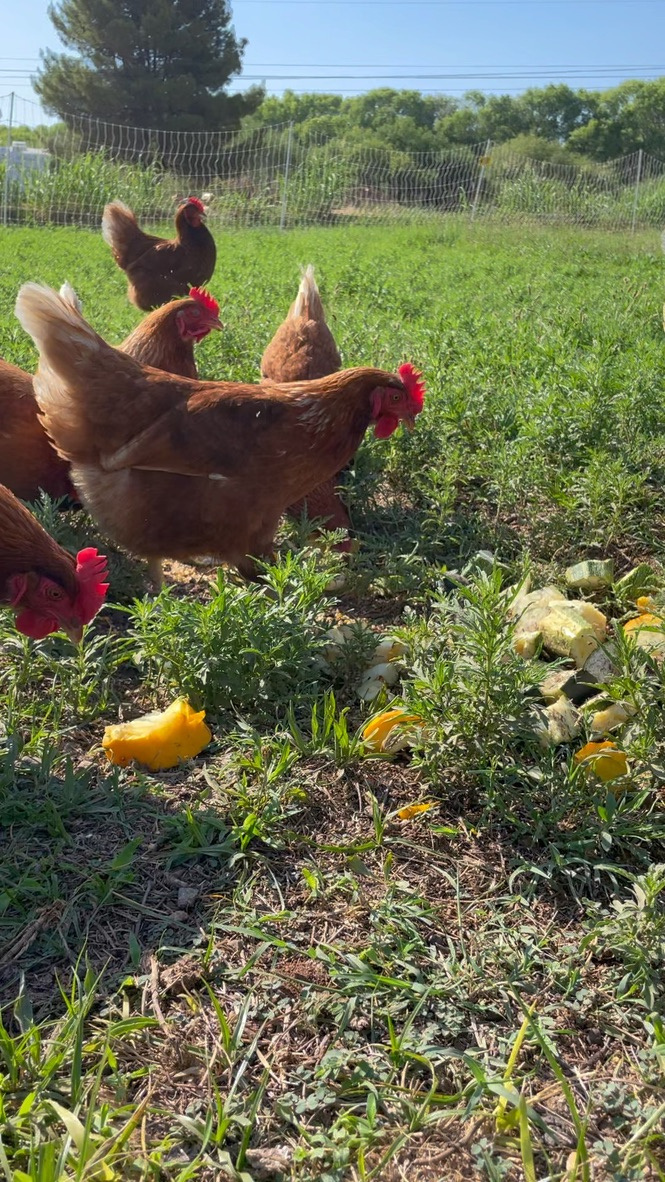
With Earth Grower I co-developed a 75 acres farm in northern AZ. I was the primary care giver, manager, and distributor of 100 Rhode Island Red layers and their eggs.
I have also worked with multiple Wildlife animal rescue and rehabilitation centers in Arionza
With my hands on experiences, continuous self imposed study on regenerative agriculture, organic animal care and farm design I have a lot to share with you all!
Thank you for trusting me as a resource for your chicken care studies!
Module 1 Introduction

Welcome to our course on Chicken care, philosophy on methods of raising them, cost of maintaining your flock, and ways to save.
By the time you finish this course, you will be able to practice observing flock health behavior, water intake levels, and possibly distress levels.
We will talk about predator protection and best practices for the prevention of loss of numbers of your chickens.
This will also include making sure you have a clear idea of why you want a flock, what size is appropriate for you, where they will live, and what type of method you want to use for raising your flock.

“Now more than ever,
we require the ability to make decisions that simultaneously consider economic, social, and environmental realities, both short and long term.”
Allan Savory Holistic Management
Let’s talk about the WHY and HOW of having chickens.
Why do we want a flock, how many, which breed is best for you, are you going to raise your chicks, do you want to sell eggs, are you looking to just have eggs for yourself, are you planning on using the chickens for pasture health?
Do you have a stationary, permanent coop, or want to move them around your property?
Have you looked into the laws of owning chickens in your area?
A huge component of raising any animals is to make sure you have a designated medical area, if you work with animals you will encounter minor to devastating health issues. This also means having specific items on hand always, ACV, gloves, a place to keep notes, etc.
When taking on the responsibility of any animal it is important to take all these questions and more to avoid excessive frustration or regret or mishandling.
At the end of this module, you should have a mission and vision statement of your intent. We will build an outline of how you ideally see this project going and set some goals.


Mission / Vision
With these statements you can ask with every action or decision “is this helping me get closer to your statements of intent or further?”.
This will make decision-making a lot easier. If you have to pivot from your original goals, it is best practice to make a plan on how to get back on track and why you need to pivot.
These should be as short as possible, a couple of sentences is a great goal.
Your mission will be your purpose of having chickens. What are you trying to achieve, what is the objective?
Your vision is finding the human value in what you are doing, how will this improve your and others' lives?
When you read these statements you want to feel inspired! It should be very easy to understand and straight to the point. You will reference this more than you might think!
Example .
Mission :
Having a flock of 25 to provide to convert my kitchen and garden waste into food for my family practicing food sovereignty.
Vision :
Having these chickens available to us will provide nutrition to my family and reduce our carbon footprint by cutting back on our waste.
Homework
- Look into Holistic Management by Allan Savory
“Holistic Management enables us to look outward to choose from all the available knowledge that is appropriate for the whole we are managing and the environment that sustains it. It also lets us predict results ahead of time”. Allan Savory
- Research breeds of chickens
Decide if you are looking for a good broody breed, or large egg or more resilient to your weather pattern, etc.
Old standard American varieties such as Rhode Island Reds, White Rocks, and New Hampshire are considered dual purpose. This means they are good for egg or meat production
- Search for local possible hatchery
Traveling far in a box through the mail can be very stressful for chicks which can lead to a weakened immune system and behavior issues within the flock. It is best practice to find a local hatchery or ranch that is willing to sell chicks or teenage chickens ( Pullets ) .


1 Deciding on your method of raising chickens
Do you want to consider a deep bedding method for your permanent coop, or do you want to build an easy way to move your flock around your property and why that matters.
Discussion on how chickens can positively and negatively affect your soil, how you utilize them for pest control, and what is a healthy method of feeding.
Consider the smell and noise

Homework
- Look up videos through Richard Perkins, Joel Salatin, and Justin Rhodes.
- Research open source plans for coops
- Search on craigslist or market place if you are looking for a budget friendly used coop
- Search and add yourself into discussion groups about chickens on social media


2 Health of chickens
This module you will be able to practice your skills in observation in your flock for their health. A few practices that help with preventative care, and how mental health matters.
Homework
- Look up these books by Gail Damerow
- The Chicken Health handbook
- The Chicken Encyclopedia
- Hatching and Brooding your own chicks
- Raising Chickens
- What’s killing my chickens?
- List all your resources for your must-have items for preventative care

3 Cost!
Consideration on cost-reducing practices for feeding your flock and key things your chickens need to stay happy and healthy. The lifespan of chickens and information on the egg
Shopping list
- Chicks or Pullets
( chicks require a brooder, heat and specific feed and attention )
- Coop 4 sq ft per chicken for heavy breed
- Feed, grit ( optional ) , calcium supplement ( oyster shell ) , scratch
- Apple Cider Vinegar
- Water system ( 1 chicken drinks 1-2 cups a day )
- Feeder ( ¼ lb a day per chicken )
- Dust bath - Sand, ash, Diatomaceous earth
( 1 plastic bin full per 50 birds or so. They will also naturally try to create their own in preferable areas like under trees. )
- Cleaning supplies - Bleach, spray bottles, gloves, rags
- Standard operating practices - spreadsheets ( create your own )
- Medical area
( could be just a space in a well ventilated / temperature controlled garage )
- Egg cartons if you plan on selling
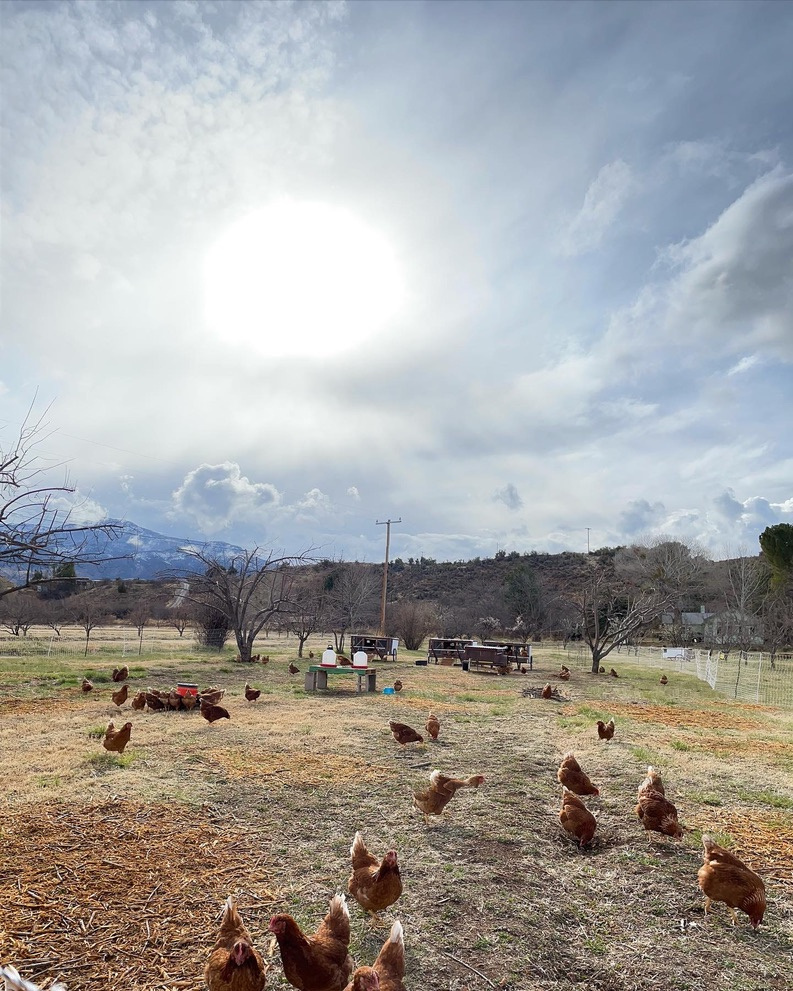
- Electric fencing if you are moving them around your property
- Carbon for deep bedding system for stationary coops
- Zip ties that are colored are easy ways to differentiate chickens who you might want to breed or who might be under observation for medical issues


4 Predators, protection
Do you want a rooster? Different guardian animals for chickens, deterrence methods, and observation skills. What animals are protected from your intervening ( Eagles etc )?

Conclusion
Now that you have finished your module, consider if chickens are still right for you. You should know how many chickens, what breed, how you want to raise them, keeping them physically and mentally healthy, predator awareness, what cost is associated, and if you want to breed.
One last note on the progression of your beautiful endeavor, please take long consideration of the purpose of everything you add. What will each animal's job be, who will care for them when you cannot? Every animal wants purpose and meaning, just like us. Even if they are companions they need daily maintenance and stimulation, this is the respectful way of co-living with animals. How will you introduce your chickens to your current animals and garden? Thinking in a way that scales; What and where can you automate? Where are you spending too much time? What drains you the most? and what fills you the most. Be honest with yourself.
Thank you for your interest!
For more from Loved and Growing
(No Spam. I promise. )
(Free resource )


Words are power.
And community is everything